| Metric No. | Supporting documents/downloadable files | |
| 6.1.1 | The governance and leadership are in accordance with vision and mission of the institution and it is visible in various institutional practices such as decentralization and participation in the institutional governance.
A. Vision To provide college education within the reach of the common man and woman. B. Mission statement: The teachers play an important role in the development of the curriculum and implementation of the vision and mission of the college. In implementation of goals and objectives, teaching contents and students’ assessment the teachers first plan and decide on the strategic and desired objectives to be followed before the academic session starts. The teachers are involved in decision making processes bothin teaching and administrative activities. Teachers are also the conveners and members of 32 different committees. Through the formation of the various committees the teachers are able to contribute to the requirements and realization of the objectives and goals of the Institution. D. The Institution practices decentralization and participative management:
|
wgcwilliamnagar |
| Metric No. | Supporting documents/downloadable files | |
| 6.2.1 | The functioning of the institutional bodies is effective and efficient as visible from policies, administrative set up, appointment and service rules, procedures, deployment of institutional strategic/perspective/development plan etc.
Organizational structure of the institution including governing body, administrative setup, and functions of various bodies, service rules, procedures, recruitment, promotional policies as well as grievance redressal mechanism. The Advisory Committee of the college constituted by the Governor of Meghalaya has thirteen members in all, comprising of Chairman, Vice Chairman, Secretary, Two Teachers Representative, E.E. PWD(Building),Williamnagar Division, E.E.PHE, Williamnagar Division, E.E.Me.CEL, Williamnagar Division, District Sports Officer, Two prominent local educationist/citizens, Two NEHU representatives. The Principal is the final authority in all administrative, academic and financial matters in consultation with the governing body and the authorities at the Directorate. The Principal appoints the faculty to various committees and supervises teachers to carry out their duties for quality and effective administration of the college. Incorporation of all the committees with the Heads of the Department, the IQAC coordinator, the office staff, and the Principalensure the smooth functioning of the college. Various committees and cells are constituted by the Principal to assist him for the smooth and efficient management of activities. Various committees and cells are formed in the college. The convenors along with the members are actively involved and perform their duties to ensure that quality teaching learning process is enriched. The various activities involved in the different committees and cells also give the opportunity to the faculty to grow and develop in their extracurricular activity and administrative skills. Service Rules, Procedures, Recruitment and Promotion Policies for the teaching staff in the college is implemented by the Directorate of Higher and Technical Education in accordance with the provision of the rules and regulations as prescribed by the State Government of Meghalaya. Grievance and Redressal Committee has been constituted in the college to look into the grievances of the students and to maintain a healthy and supportive atmosphere among students, faculty and management in the Institution. A complaint Box has also been set up for the aggrieved students to redress their individual grievances and to register their complaints. The strategic plan to apply for grants from the State Government for the development of the Institution has been one of the most fundamental step taken and main focus of the Institution. The proposal and the fund applied for has been fulfilled and with the financial aid received from the Government some activities and programmes have been successfully implemented as outlined in the strategic plan. 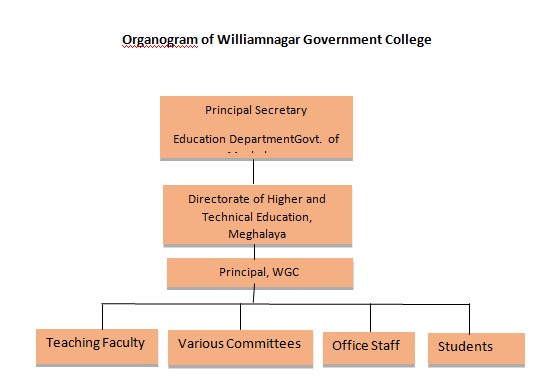
|
|
| 6.2.2 | Implementation of e-governance in areas of operation.
Options:
|
| Metric No. | Supporting documents/downloadanle files | |||||||||||||||||||||||||
| 6.3.1 | The institution has effective welfare measures and Performance Appraisal System
for teaching and non-teaching staff
The institution has some welfare measures for both teaching and non-teaching staffs in accordance with the Meghalaya Service Rule 2019:
Welfare measures for non- teaching staff: -
Performance Appraisal System for Teaching Staff:
|
Finance Department eNPS - National Pension System | ||||||||||||||||||||||||
| 6.3.2 | Percentage of teachers provided with financial support to attend conferences/workshops and towards membership fee of professional bodies during the last five years.
6.3.2.1 The Number of teachers provided with financial support to attend conferences/workshops and towards membership fee of professional bodies during the last five years.
Percentage = 4/31×100= 12.90% |
|||||||||||||||||||||||||
| 6.3.3 | Percentage of teaching and non-teaching staff participating in Faculty Development Programmes (FDP), professional development/ administrative training programs during the last five years.
6.3.3.1 The Total number of teachers attending professional development Programmes viz, Orientation Programme, Refresher Course, Short Term Course, Faculty Development Programmes during the last five years are: -
6.3.3.2The Total number of non-teaching staff attending professional development Programmes viz, Orientation Programme, Refresher Course, Short Term Course, Faculty Development Programmes during the last five years are: -
|